Thursday, September 30, 2021

A Map of the Fabulous

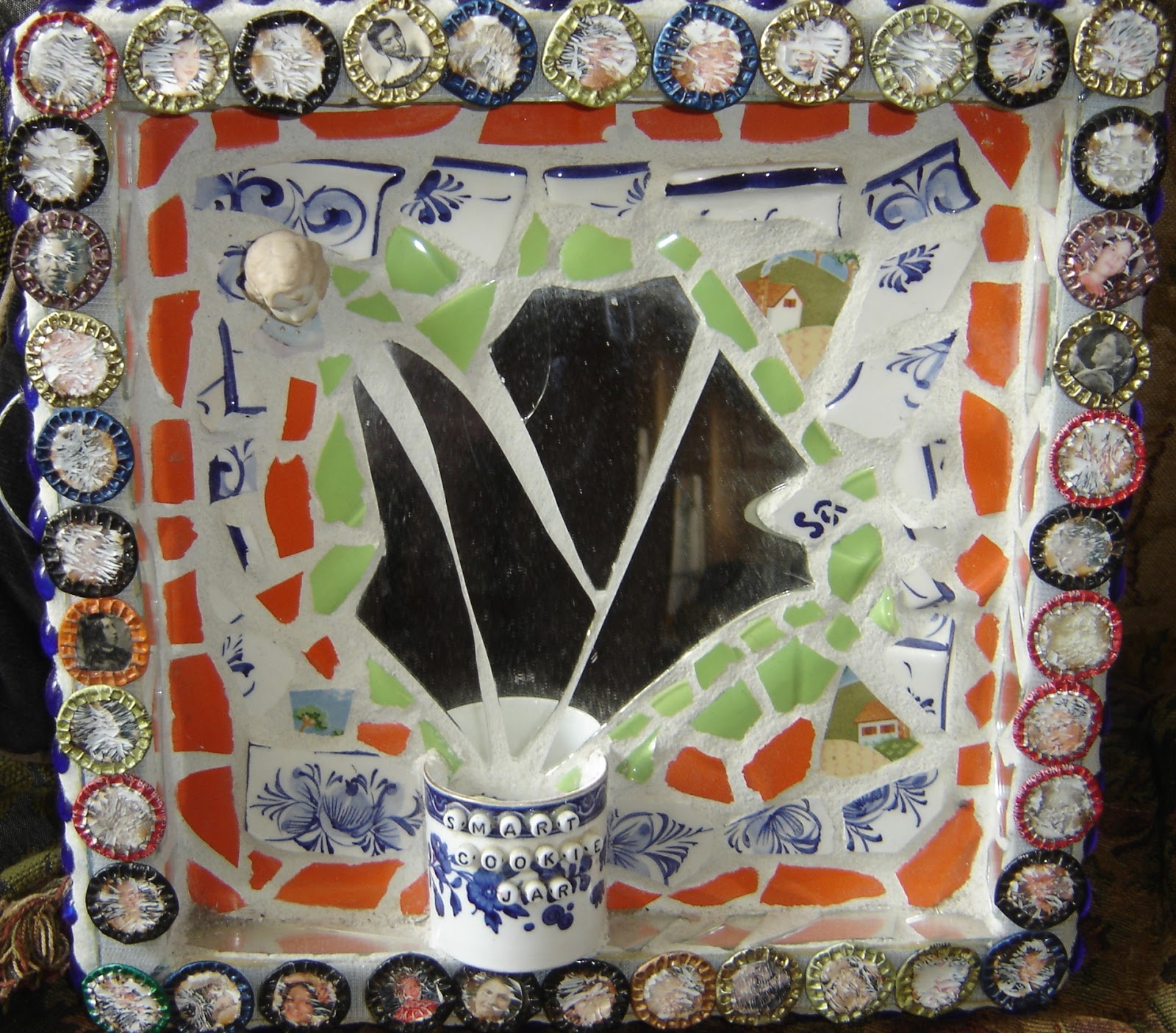
 It was my pleasure to have the opportunity to write this story about artwork by Julia Shirar and David E. Kearns at Looky Here, 28 Chapman St., Greenfield.

It will be up through Oct. 24, 2021. I highly recommend making the time to go see this show.

If you can, please support The Montague Reporter. It is a wonderful local newspaper.

https://montaguereporter.org


Monday, February 1, 2021

Farm.1

 Work in progress:

Farm: Cold Awake is an audio project that began when I was surprised by the killing frost in September 2020 at Just Roots Farm in Greenfield, Massachusetts. The summer of the pandemic year felt like it might last forever, but the frost brought home the acceleration of the harvest season and the impending election.

This place was once the community poor farm, and now, when we tend to be farm poor, it provides healthy food and community garden plots. 

Access to the land is something I turned my full attention to during the pandemic year. 

In a time of political uncertainty and a deadly contagious virus, I was almost shocked that life could spring from the earth, that birds carried on with their flight and songs. Sheep grazed in the neighboring pasture, and napped in the shade of a barn. 

I listened, and was startled from despair.

Here is the first installment.

Farm.1


Wednesday, October 21, 2020

Memory is too much a burden: poem and painting


My poem, "Memory is too much a burden," and my painting below, "Marin Headlands Study 1," were published in The Montague Reporter's poetry page on April 30, 2020, with poems and art by Trish Crapo and Nina Rossi. Christopher Sawyer-Lauçanno is the poetry editor at The Montague Reporter. 

Marin Headlands Study 1
 

Memory is too much a burden


Memory is too much a burden.

With this acceleration, 

the requisite catalog 

too much to keep.


Forgetting is a luxury. On Thursday the president proposed 

we inject disinfectant. How do you write a love poem? 

The birds have returned to look at us.

A robin, perched on the fence, 

watches me drag a chair across the yard

to sit and read a book.


A friend’s bicycle helmet    hangs on a wooden beam

now a nest for finches. I cannot 

remember the sweet tobacco of my mother’s hair. I cannot 

remember the tilt of your mother’s head 

as she worked a hook in yarn. I cannot 

remember how sunlight beams in through the tall windows, 

stretches the length of the wooden floor 

as we work together. I cannot remember sitting, 

our elbows on the table, as we argue the succulent oranges 

from their pungent, elastic skin.

-Samantha Wood


Wednesday, September 30, 2020

#RiverWitness: The knife


This knife.

My mother’s extended family, Russian Jewish refugees, settled in the Connecticut River Valley, in Connecticut, in the early part of the 20th century.
They came to this region to farm because of the excellent soil turned up by the river itself.

My mother referred to this knife as the “bread knife” and it had belonged to one of her grandmothers, D’vorah, one of my great-grandmothers for whom I am named. Before my mother died, she gave me the knife.

And so, I found myself, years after coming to live in Greenfield, Mass., while working at a newspaper here – and in so doing, learning much about the history of this place – standing in my apartment holding this knife in my hand and pausing to read the stamp on the blade.

Russell. Green River Works.

A couple blocks away from where I was standing in my kitchen in an apartment in a building built around 1850 to house railroad workers, was the first site of this company – a factory powered by the Green River.

A couple of decades later, around 1870, the company moved over the low ridge to Turners Falls and expanded in a facility powered by the Connecticut River.

Standing there in the kitchen with this knife in my hand, I understood that much in my life has been shaped by these rivers. The knife had come home. #RiverWitness.

****

The #RiverWitness campaign, a create community response and social media tool to connect the communities in the Connecticut River watershed in service to the advocacy work of The Connecticut River Conservancy, has been developed in partnership with the Collaborative Community Art Response Team (CCART) and The Art Garden, and is supported by a grant awarded by The Community Foundation of Western Massachusetts with funding from The Barr Foundation.

Thursday, April 23, 2020

COVID-19: Greenfield masks

Greenfield Mayor Sticking by Mask Advisory

Says Mandate Would be Too Great a Burden on City


GREENFIELD – Amidst growing calls that the city mandate the wearing of face coverings in public, Mayor Roxann Wedegartner has explained her reasoning for holding to the advisory the city issued last week.
 The wearing of face masks and their efficacy in stemming the transmission of the novel coronavirus has become a topic of much discussion, with some countries calling for the wearing of masks in public. The Centers for Disease Control first advised the American public earlier this year that masks weren’t necessary, and even that masks should be avoided due to a shortage of professional protective gear for medical professionals. Then, on April 3, the CDC reversed its position, advising the public to wear a mask when going out, and provided instructions on how to make a simple one.
 During a Thursday afternoon press conference outside the emergency operations center (EOC) at the John Zon Community Center on Pleasant Street, Wedegartner explained her reasons for maintaining this city’s advisory position: the burden of enforcing such a mandate, and the inability of the city government to provide a mask for every resident.  
“Our police department and our health department employees are working hard to address daily calls and issues around social distancing, and believe me, there have been many, many calls,” Wedegartner explained. “They did not need this added enforcement action in their day-to-day work.
“In regard to access [to masks], the EOC, with its on-going supply issues, was unclear if they would have the capacity to both meet their mission and meet the demand for distribution of PPE to all city residents – which I feel like we would have to do if it were mandatory,” the mayor said, adding “we strongly encourage everyone to wear face coverings when out in public as an additional layer of protection for yourself and your community.”
On Sunday, former city council president Karen “Rudy” Renaud posted on Facebook that she intended to ask the current council leadership to schedule an emergency meeting “to discuss face coverings in public.” A day later, she submitted a draft ordinance to the council that would mandate their use.
On Wednesday, city council president Ashli Stempel-Rae and council vice president Otis Wheeler issued a statement in reply, saying they had discussed the matter with local leadership, and they had decided not to take action toward mandating masks.
“There have been requests for City officials to order that face masks be worn in public, and for City Council to hold an emergency meeting to discuss. We appreciate and understand the spirit of the request; health and safety is our greatest concern, and in a state of emergency, an abundance of caution is warranted. However, after conferring with Mayor Wedegartner, and inquiring with Command Staff,” the press release reads “we feel that such an action is not justified at this time.”
“It remains as it was outlined in our release, a strong advisory,” the mayor said Thursday. “The city is not mandating the wearing of face coverings in public and there will be no fines issued or negative consequences for members of the community who do not have a mask to wear in public.” 
However, the mayor had stern words for local businesses. 
“I especially want to remind all of our retail businesses that have been designated as essential and able to stay open, to have their employees wear masks as well as make every effort to encourage customers to be doing the same thing.
“Our board of health is monitoring our essential retail businesses, at my direction.”
The city is working with local crafters who have been making masks for use by the general public. “This week we’ve launched a donation and distribution drive for homemade cloth masks,” the mayor said, adding that hundreds of masks have been pledged by an anonymous donor and are expected soon at the EOC.  
If any Greenfield resident needs a mask, the mayor encouraged them to contact the city’s COVID-19 resource and information line at 413-775-6411.
“It is a type of honor system,” the mayor said.
A number of Massachusetts cities have recently mandated the use of face coverings in public, including Northampton, Holyoke, Salem and Brookline.

Monday, February 3, 2020

Abstract art in a time of increasing surveillance

Map by Nelena Soro

One of the pleasures of curating You Are Here and Exploded View's residency at The Great Falls Discovery Center is getting to spend time with the art, pausing, returning, focusing and pursuing the unfocused gaze. 


Abstract art, both visual and musical (and here I am thinking about improvisational music and jazz, especially), is sometimes difficult or frustrating, sometimes it is considered foolish, a mess or a waste of time. 


American culture makes almost no room for it. I suspect this is because so much of our communication and working life is representational, or literal, and we are often punished or considered suspect for associative thinking or creative pursuit. Time is money, they say, are you wasting time?


With increasing saturation of surveillance technology, people may pay more attention, whether overtly or subconsciously, to what is expected of them.
And people may, increasingly, do only what is expected of them.
Can we even grasp the loss implied in this?
This is the subtext I hear when people say that surveillance technology provides a convenience and it is only a problem when people have something to hide.


Because it refuses to tell us immediately what it is, abstract art confronts people with the act of feeling and creating meaning on the spot. This is, perhaps, unsettling. It immediately violates the rules of a culture that wants you to do only what is expected of you, because no one can know what you will see or hear in such art. It requires you to respond.


For me, this unknown ability, this invisible organ – sensory nerves fueling muscles of the imagination – is the best thing about being alive. It is at the core of our ability to think, to solve problems, to make something new. 


And as we move toward an increasingly surveilled state of being, in a culture that has always been suspicious of art, I think it is even more precious and worth making. 
*
To learn more about the artists in You Are Here, go to:

https://explodedviewma.blogspot.com/2020/01/you-are-here-in-personal-cartography.html

Sunday, July 28, 2019

Antenna 1


An audio collage


This work is part of a larger project examining the mechanism and meaning of antennas.
It was prompted by the event: 413 says #CloseTheCamps, which was organized by Theatre Truck. This piece was first played in public at midnight on July 27, 2019 during that 24 hours of performance at The Shea Theater in Turners Falls, Massachusetts.

Run time is 27 minutes and 53 seconds.

Thursday, January 31, 2019

A letter to the editor sent to The Recorder in Greenfield, Mass., on January 23, 2019 on the topic of the proposed library project.

Renters and the library

It is a myth often repeated that renters do not pay property taxes. 
In most cases, renters, through their monthly payments, cover taxes and the mortgage on the dwellings they rent. Renters also increase wealth for landowners. I would challenge anyone to look at the rents in Greenfield and consider what all that money could be paying for, if it isn’t also covering property taxes. It is difficult to find an apartment with one or two bedrooms in Greenfield for less than $1,000 per month. A house will be more.
Other strange myths about renters include that they aren’t committed to their communities, they won’t stay here for long, they don’t care about the local landscape, and that there is something fundamentally wrong with them for not getting the money together to buy a home. I have heard all of these opinions expressed in conversation. Take a look at average local wages and calculate how difficult it would be to save enough money for a down payment on a home while paying that rent and maintaining a vehicle. Now add student loans, a child, saving for retirement. 
Surely, some homeowners will be having trouble making ends meet, as will many renters.
And through all this, there is tremendous public support for the library project in Greenfield, across these sectors. 
A new and adequate library is an essential service. It is the starting point of continuing education for the entire population. The library is the community’s center, where members of the public exercise the First Amendment every day with access to news, information, arts and culture, and meeting spaces. We pay for this collectively through our taxes, local property and state income taxes. It’s a great idea. Let’s build a good library.

Samantha Wood
Greenfield

Monday, December 31, 2018


Light gets in

It is time to return to the laws of thermodynamics.

1- energy cannot be created or destroyed 
2- entropy always increases – something will be left behind
3-The entropy of a system approaches a constant value as the temperature approaches absolute zero

What is light?

Merriam-Webster says:
 electromagnetic radiation of any wavelength that travels in a vacuum with a speed of 299,792,458 meters per second, specifically  such radiation that is visible to the human eye”

Whose eye?

Light is measured in candelas and lumens.

A candela is a measure of intensity equal to the light of one candle.
The lumen is a measure of luminous flux.

Energy cannot be created or destroyed, but where does it go when it gets in your eye? 
What is light in the body and mind?
Does entropy pool in the feet, the knees?

Light gets in but where does it go? 
Energy always moves, unless we register a temperature of absolute zero-

We are faced with a question at this time of year: 
Can we live without light?
Can you even see down the road to get home?
The Doppler of inspiration coming at you and leaving,
are we meant to freeze in a perfect stillness?

Energy cannot be created 
or destroyed.
It gets in your eye.
For we are an imperfect instrument,
and light cannot stop.

Even the light of one dead star on the darkest night is moving at a speed of 299,792,458 meters per second.
You can feel it when it hits you. 


I performed this poem at The Holiday Spectacular at The Shea Theatre in Turners Falls, Massachusetts, December 14 & 15, 2018.

Wednesday, November 14, 2018

You can read my letter to the editor in support of the Pioneer Valley NewsGuild here (it has been updated to include information about cuts at The Recorder and my work at The Berkshire Eagle):


A public letter to Aaron Julien, president of Newspapers of New England, and Mike Rifanburg, publisher

You should recognize the Pioneer Valley NewsGuild (the union recently formed by  employees at The Daily Hampshire Gazette and The Valley Advocate) immediately and bargain with its members in good faith.
These journalists know how to make your newspapers strong. 
Decisions made under your management in the last year to cut local news staff at all the region’s papers under NNE ownership have led to a blistering decline in reader support, and worsening conditions for the most dedicated journalists who remain. There has been a serious and noted drop in quality news coverage across topics, including local government and the arts.
Recent cuts at The Greenfield Recorder have done severe damage to that newsroom
and the local operations in Franklin County, including circulation and advertising. There is no longer a night desk there.
Your purchase of the Athol Daily News and slashing of that staff has imperiled another local newspaper necessary to the towns it serves.
This has been a long time coming. Employees approached management on numerous occasions, and worked long hours in good faith to try to make the best of horrible plans.
As so eloquently observed in the Declaration of Independence “all experience hath shewn that mankind are more disposed to suffer, while evils are sufferable than to right themselves by abolishing the forms to which they are accustomed.”
These journalists are fighting to save these papers, and they have learned they are not alone. 
Now they are offering you the opportunity to join them in that effort.
Supporting this union now will bring the most qualified people into the room. Western Massachusetts deserves good local news coverage. Every community does.
Show some respect and humility, and look to the people who know best how to do this work.

Sincerely,
Samantha Wood
former managing editor for news of The Berkshire Eagle, former managing editor of The Daily Hampshire Gazette, and former longtime editor on the night desk at The Greenfield Recorder

Monday, July 23, 2018

Jul 23, 2018

There’s an editorial in The Recorder calling for a change in the Greenfield laws to ban people sleeping in the rough on the town Common.
Perhaps the current editorial writer has forgotten the purpose of the New England town common, or has subscribed to the notion that a town’s branding is more important than the commonwealth of the people who live there.
It’s a punitive, fearful, discriminatory cry from a local company that has itself long felt at liberty to pay its employees so little they routinely qualify for public assistance and cannot afford the rising local rents.
Perhaps some actual cross-sector collaboration and energy pulled together on practical housing policy to imagine and create truly affordable apartments in the walkable and bikable downtown, would be a better idea.
This is Franklin County after all, a place known for the highest percentage of income of charitable giving in the state even as its residents live pretty close to the bone. This is a place where people create food co-ops and arts organizations and farm shares and a Garlic Festival, Conway throws a dessert potluck to study-up before its town meeting, Greenfield built a stellar music and balloon festival — all this happens because people are sometimes simply fearless enough to dream up good ideas and show up to help.
We make some wicked good beer, too.
A good editorial should offer vision and leadership. This is a shameful piece.
We can fix the housing crisis locally, by using our imaginations, our good will and taking care of each other. I bet there will even be a few fun potlucks along the way.

-Samantha Wood

Saturday, April 14, 2018

Hauling Toward Home

An audio installation


I have come to a place in my life 
where I no longer know what "home" means.
Is it the place where I live?
Or is it the people I love?


Hauling Toward Home explores rowing across dark water to reach a familiar harbor. 
This project includes members of my family, separated by distances spanning the circumference of the planet, and friends from eras of my life so distinct from each other it is as though they occurred in separate dimensions.
But they are not separate. 

This installation launched at Eggtooth Productions
Full Disclosure Festival: Radical Interconnectedness
Turners Falls, Massachusetts
April 14, 2018

Listen in two parts.

Hauling Toward Home 1


Hauling Toward Home 2


Samantha Wood is an artist living in Western Massachusetts. She earned an MFA in Poetry from the University of Massachusetts Amherst. Hauling Toward Home is her third installation in Eggtooth Productions' Full Disclosure festivals. Previous works include The Uncertainty Cube and “Touching Myself,” a short play with Ayshia Stephenson.
Samantha Wood is a member of the art and performance group Exploded View. She works as the managing editor for news at The Berkshire Eagle in Pittsfield, Mass. (April 2018)


Monday, August 15, 2016

Exploded View

Exploded View

A multimedia exhibit and word performance by eight Pioneer Valley women:

Lea Banks, Trish Crapo, Edite Cunha, Candace Curran, Elizabeth MacDuffie, 
Diana Pedrosa, Nina Rossi and Samantha Wood 

Dynamic. Physical. Linking and exploding boundaries between word and vision, personal and public, with static and moving parts.

Each artist was tasked with finding a way to work with this idea of the exploded view, that shows parts relative to a whole, breaks something apart or explains a way of seeing the relationships between parts, whole or broken. Each has created a piece of visual art and a poetic text. Some of the art is sculpture, installation, three dimensional, some is collage and drawing, some digital.

Works in progress -- the group will have its first show during the Greenfield Annual Word Festival in October 2016 in Greenfield, Massachusetts. Here is a taste of some of the work by these artists. Some of these are previous works and some in progress for the Exploded View show.


Trish Crapo. Why Does the Knife.


Edite Cunha. There was Something I was Supposed to Tell.

Trish Crapo


Edite Cunha. Fervor from the Truth


Elizabeth MacDuffie. Hey, baby (prototype).

Diana Pedrosa. Date Night
Nina Rossi. Head.

Nina Rossi
Diana Pedrosa


Samantha Wood. Uncertainty Cube.


More work and other projects by these artists can be seen at:
Lea Banks: leabanks.com
Elizabeth MacDuffie: Meat for Tea: The Valley Review meatfortea.com
Diana Pedrosa: www.ixchelailee.wix.com/artwork
Nina Rossi: Nina's Nook ninasnook.com

Exploded View was conceived by Candace Curran, who showed up in my studio one day hauling a stack of old auto repair guides, saying "I've fallen in love with parts manuals, what do you think of this?"
Poet and librarian by trade, Curran has a history of bringing people together to make something new.
She produced Interface, a collaboration of word and image, which included a dozen events between 1993 and 2010 in the Haley's Publishing barn, the 1794 Meetinghouse, New Salem, Orange Innovation Center, Montague Book Mill .... These events were a marriage between poet and artist. Artists included were Les Campbell, Norah Dooley, Linda Ruel Flynne, J.R. Greene, Dorothy Johnson, Susan Pepper Aisenberg, Donna Estabrooks, Janet Macfadyen, Richard Baldwin, Jean Stabell, Candace Anderson, Alice Schertle, Barbara Ellis, Hugh Bloomingfield, Amy Fagan, Julia Penelope, Renata Sylvia Pienkawa, Cathy Stanton.

Artist bios:
Lea Banks is the author of All of Me (Booksmyth Press, 2008) and forthcoming collection The Bottomland. She lives in Western Massachusetts, is the Poetry Coordinator for the Brattleboro Literary Festival in Vermont, and founder of the Collected Poets Series in Shelburne Falls, Mass. Banks has published in several journals including American Poetry Journal,  Connotation Press, Big River Poetry Review, Poetry Northwest, Slipstream, Diner Sweet,San Pedro River Review, Town Creek Poetry, The Laurel Review. She has recent work in Meat for Tea, and off the margins where she was the guest poet. She has work forthcoming in Queens of Cups.

Trish Crapo is a poet, writer, photographer and multimedia artist working in western Massachusetts. Her photography and art have been exhibited throughout New England, at the New School in New York City and in Moscow and Tula, Russia. Her book Dune Shack is a collection of images and words, made among the dunes on Cape Cod from a residency in 2013. Her chapbook Walk Through Paradise Backwards was published by Slate Roof Press in 2004. Her poetry has been published widely, including in Southern Poetry Review, Bark and Meat for Tea. She covers poetry and the arts for The Recorder.

Edite Cunhā is a writer, artist, teacher and activist. Her fiction has been published both locally and nationally and won awards and fellowships including Smith’s Spencer Prize for Excellence in Writing, AWP’s Intro Writing Award and the Tara Fellowship for short fiction. She has been a fellow at the Vermont Studio Center, A Room of Her Own and the Disquiet Literary Program. She believes that creativity can transform the individual as well as society, and leads creative writing and multi-media art workshops for people of all ages. Cunhā has a BA from Smith College and an MFA from Warren Wilson College. She lives in Turners Falls, Mass.

Elizabeth MacDuffie, along with Alexandra Wagman, founded Meat for Tea: The Valley Review over a decade ago. She is a proud and enthusiastic member of the Exploded View group. She lives in a house with a blue kitchen, in which she enjoys creating epicurean delights.

Diana Pedrosa is a multi media artist who goes by the alias ixchelailee or ixchel. She combines past photography education and passion for image transfer with her tactile inclinations towards fibers and patterns. Her materials include pattern paper, electrical, scotch, & gaffer's tape, found and appropriated images, photographs & photocopies, glue and paint and most recently digital photo editing programs. She lives in Turners Falls, Massachusetts.

Nina Rossi is an artist and writer in Turners Falls, Massachusetts, who is known for her odes to abandoned shopping carts and her sculptures of garden slugs, among other diverse creations, and her ridiculously narrow Nook gallery.

Samantha Wood is a writer, artist and editor living in western Massachusetts.